The Artist’s Way: Week Six Reflections

Recovering a Sense of Abundance

Happy last day of summer, and welcome to my new website! While I’d been enjoying using Substack to publish this blog, even after about a month and a half of use, I was still finding the platform difficult to navigate. WordPress seemed like a good alternative as I am relatively familiar with the platform- I kept a blog on WordPress for a number of years in my teens and early twenties. I’m still working out some kinks with WordPress, but I’m optimistic that I’ll feel at home again here soon.

On an unrelated note- is it just me, or is anyone else feeling strangely burned out? I’ve been plagued by a persistent sense of exhaustion since about the start of the month, and I haven’t been able to identify the culprit. The fatigue definitely spilled into my experience with The Artist’s Way this week- while I kept up with my morning pages and went on an artist date, I found very little time or energy to create, even though I wanted to. I’m a bit disappointed!

Lessons from the Text

The focus of The Artist’s Way this week was recovering a sense of abundance. Mainly, Julia Cameron asked participants to examine their relationships with money, because money can be a significant contributing factor to creative block.

Many of us carry the belief that being an artist is incompatible with financial stability. We may not see art as a “productive” hobby, and we may feel like we need to prioritize “practical” pursuits over artistic ones in our lives. Cameron writes: “most of us harbour a secret belief that work has to be work and not play, and that anything we really want to do – like write, act, dance- must be considered frivolous”. I certainly agree with this sentiment- as I’ve discussed before, for many years, I prioritized school and my career over art and creative living. Nowadays, I even see myself prioritizing more “productive” hobbies, such as exercise, over making art. This is something I’d like to change. 

Financial stress can also cause artists to get in the habit of denying themselves luxuries (even small ones) in the pursuit of saving money. Cameron gave an interesting example in the text of a woman who loved raspberries but never let herself buy them because they were too expensive. Not all luxuries need to be expensive, or cost anything at all: time spent in creative solitude, for instance, can be a great luxury. Cameron argues that when we allow ourselves to accept small luxuries, we open ourselves up to a greater creative flow overall.

Finally, the text challenged participants to analyze their own thoughts and feelings about money. I reflected on my own influences when it comes to personal finance- from my parents, who were definitely savers, to the pessimistic zillenial sentiment that young people will never be able to afford things like houses no matter how much they save, so they may as well splurge on small luxuries. My personal philosophy about money is a blend of these influences- while I value saving money, I’m also not afraid to spend on “little treats” like takeout coffee a few times a week.

Tasks

The tasks this week were quite interesting. Participants were challenged to go outdoors and collect rocks, leaves or flowers and notice the natural abundance in nature.

Another task asked participants to track their expenses for the full week, assess where they spend their money and evaluate whether their spending habits reflect their values. For this task, I reviewed my spending habits starting from the beginning of September. I found that (apart from “necessary” expenses like rent, insurance and my phone bill) I had spent the most money on clothes. This was very surprising. For the last while, I’ve been wanting to buy myself better quality watercolour paints, but dismissed the purchase as “too expensive”. The financial audit made me wonder why I denied myself the small luxury of better quality paints when I easily just spent 4x the amount I would have spent on paints on a few jackets and a pair of pants. 1

Artist Date

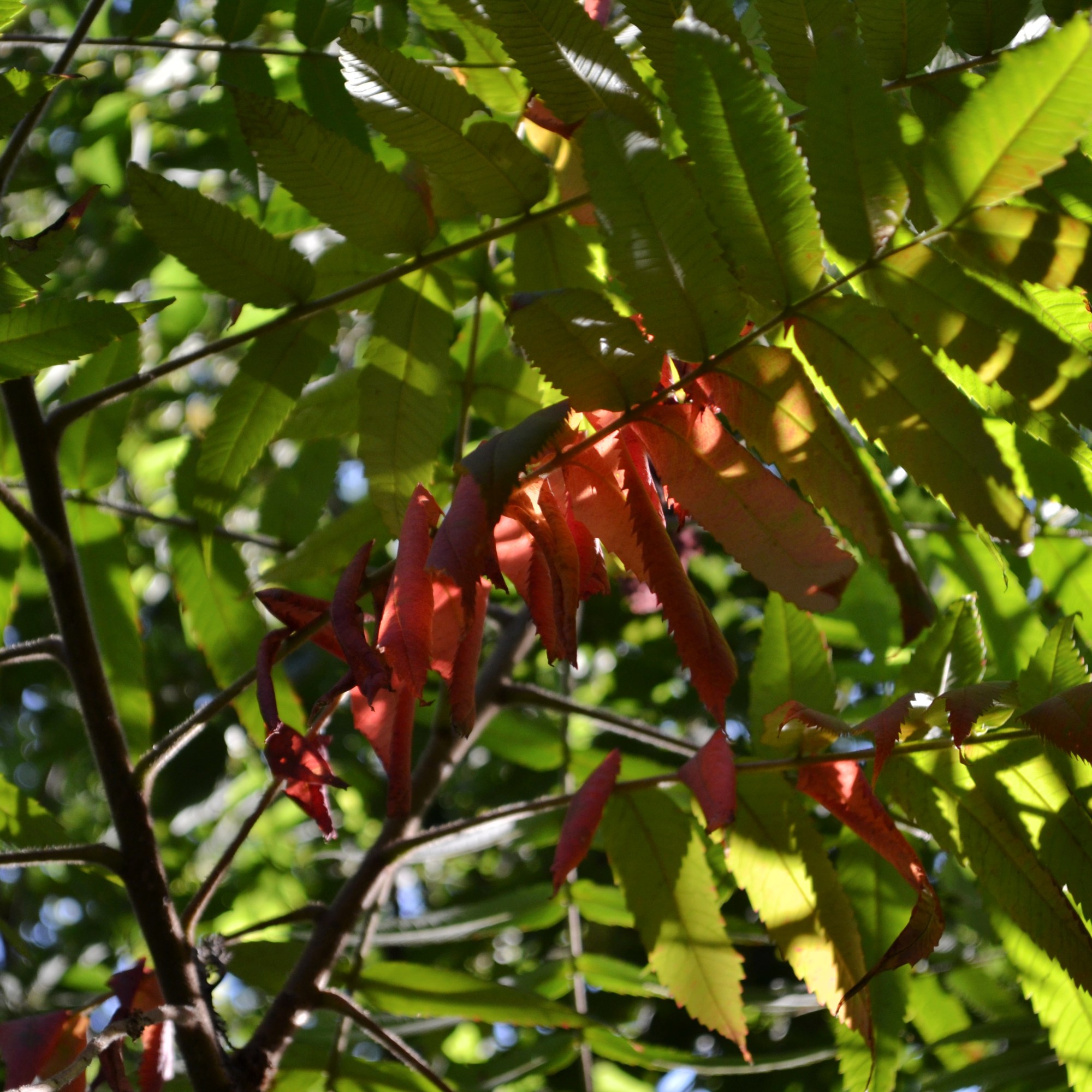
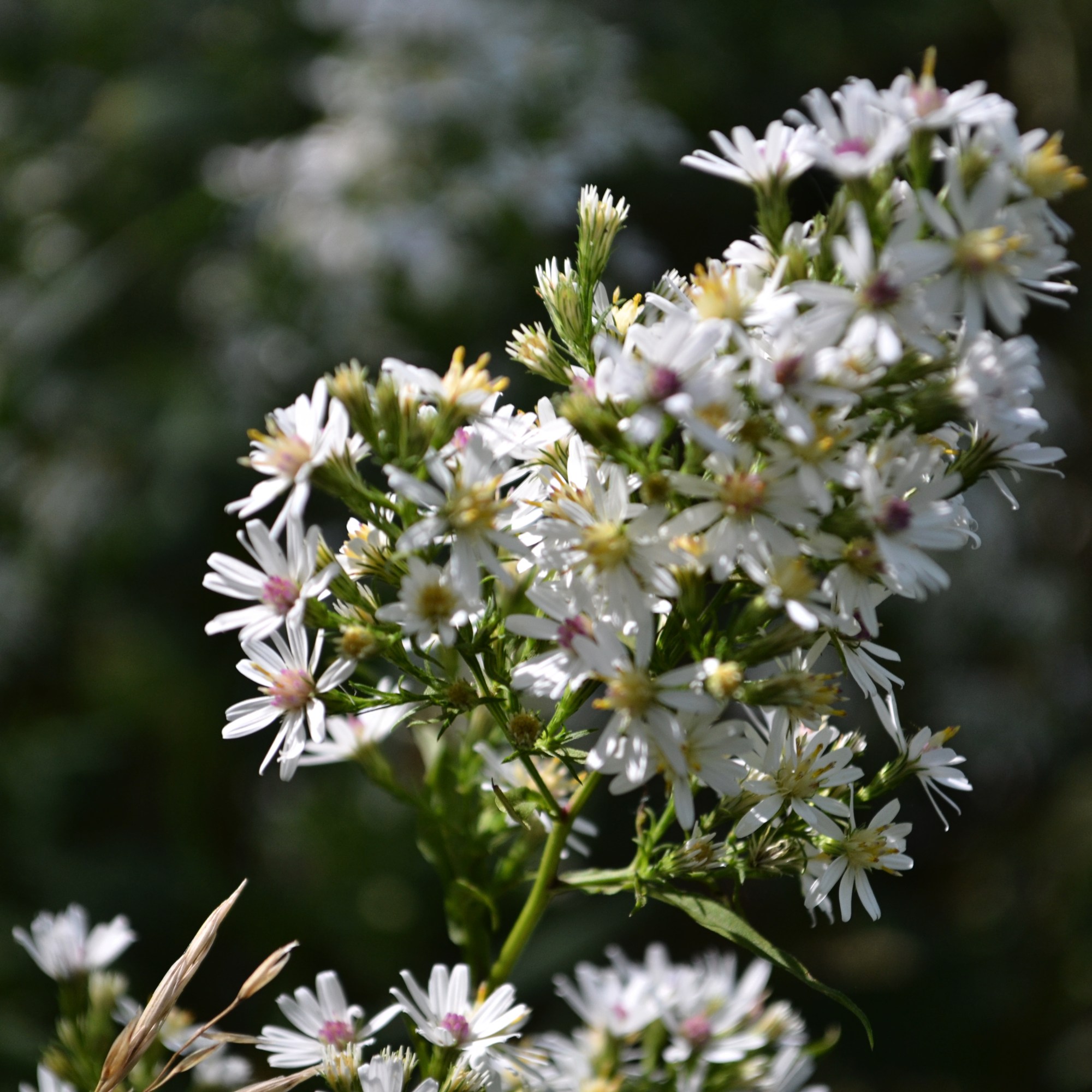
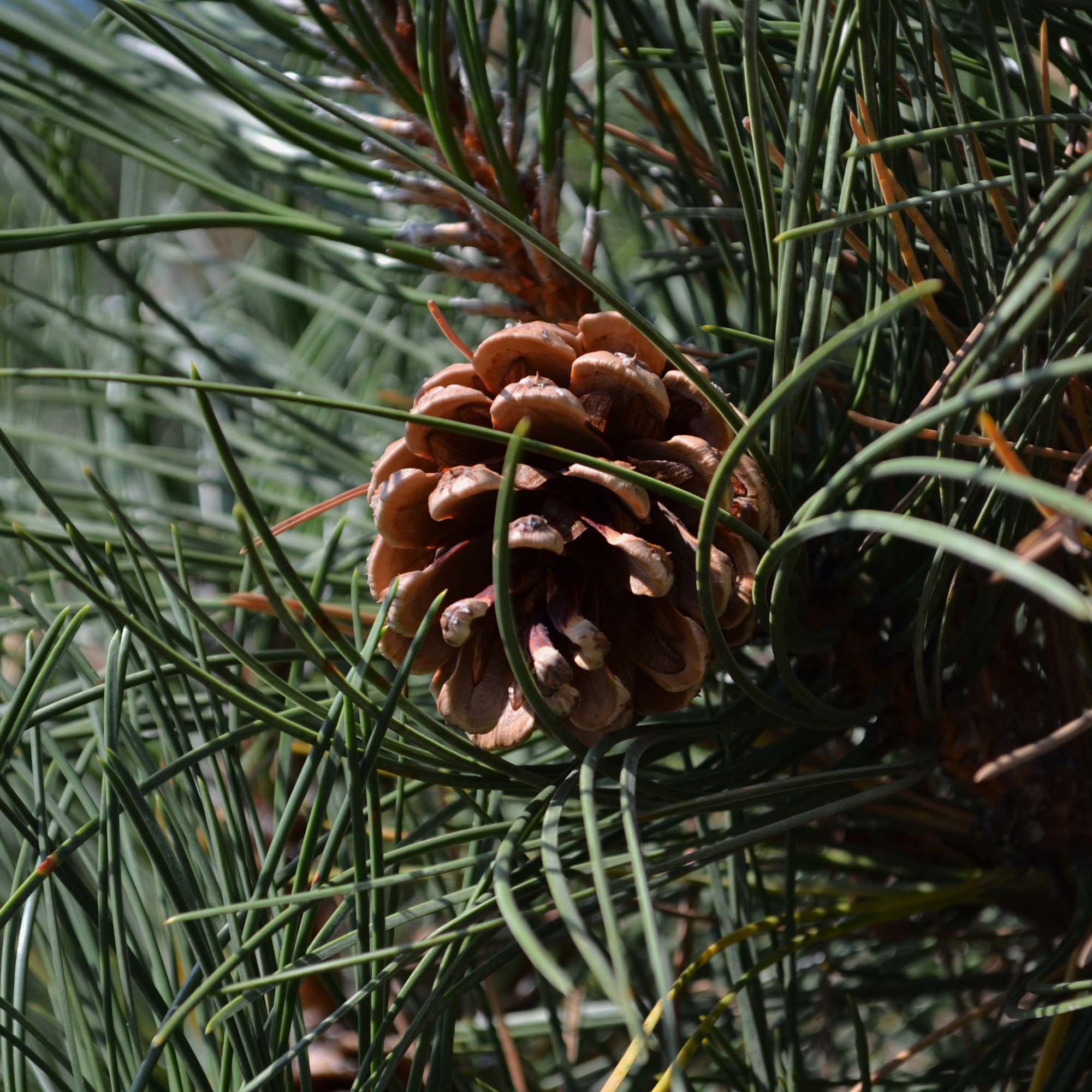
For my artist date this week, I took myself on a nature walk through the Black Creek Parklands. There, I completed one of the tasks for the week and collected leaves. There seems no better time than early autumn to complete this exercise when the leaves are all starting to change colour. Spending time outdoors always makes me appreciate all the natural (and free) beauty and abundance in the world. 

I made sure to bring my camera along to take some photos, and kept my phone turned off to have a truly sensory, distraction-free experience. I paid attention to the chirping of birds, the changing colours of the trees, and the contrasting sensations of the cool, crisp morning air and the warmth of sunlight on my skin.  
I realize that I’ve done similar artist dates for the past three weeks, so, next week, I’d like to challenge myself to change things up. I’m hoping to either visit a museum or experiment with a new artistic medium. 

Until next week, 

Laura Kate

P.S.- I just realized I’m exactly halfway through The Artist’s Way! I feel like the program has been so beneficial already in encouraging me to live a more creative life. Here’s hoping the next six weeks are just as illuminating. 

  1. Spoiler alert- after I drafted this blog post, I DID end up buying myself some better-quality watercolour paints. All in the name of embracing small luxuries, right? ↩︎

The Artist’s Way: Week Five Reflections

Recovering a Sense of Possibility

Happy Sunday!

As I’m sure you know by now if you’ve been keeping up with my posts, I’m currently participating in Julia Cameron’s 12-week creative recovery program, The Artist’s Way. Each week, the program has participants read a chapter in an accompanying text, complete some tasks, write daily “morning pages” and go on an artist date.

The theme for this week was recovering a sense of possibility. In the text, Julia Cameron talked a lot about artificial limits and ceilings that we impose on ourselves. In reality, regardless of what we might think, our creative possibilities are infinite.

Cameron also discussed the importance of creative solitude: time alone for artists to create and recharge. Despite the importance of this time, many artists get stuck in what Cameron calls the “virtue trap” where they give away all the time they would otherwise spend alone to others. Cameron argued that giving away our time for solitude is detrimental to our creative selves and ultimately self-destructive. “Afraid to appear selfish, we lose [ourselves]”.

From personal experience, I know that Cameron is right about this. For many years, I prioritized school, my career and productivity more generally over artistic pursuits. For years, I stopped creating altogether, and I paid the price. As a result of failing to take any time for creative living, I found myself unfulfilled and in a state of paralysis when I tried to start creating again.

Tasks

Most of the tasks for this week involved collecting images for an “visual image file”:

“List five desires. For the next week, be alert for images of these desires. When you spot them, clip them, buy them, photograph them, draw them, collect them somehow. With these images, begin a file of dreams that speak to you. Add to it continually for the duration of the course.”

I took this to mean making a moodboard. To get started, I temporarily reactivated my Pinterest account, found some photos that aligned with my desires and fantasies, printed them out, and began assembling them into a collage. Throughout the rest of this program, I’ll do my best to add other inspiring images I encounter.

Morning Pages

I felt very annoyed and resentful with the morning pages this week, and, in fact, had my first “slip-up” with them. I did not complete the morning pages on Thursday. While I definitely understand the value of the exercise (morning pages force me to create something every single day, even when I don’t want to, and without worrying about the quality of what I’m creating; they also allow me to work through my thoughts and feelings), having to spend half an hour writing them every morning feels tedious. I think I would appreciate them more if I didn’t already regularly journal or have a regular morning routine.

Artist Date

On Friday night, I took myself and my Nikon D3100 to the Toronto Beaches to watch the sunset. The beach is, famously, my favourite place in Toronto (I ended up there again on Saturday morning for a run). I walked along the coast collecting seaglass, watched the sky turn from blue to pastel pink and purple, and listened to the waves crashing against the shoreline. This was a very sensory experience- I did my best to take notice of all the sensations I was experiencing: the sights, the sounds, the smells. I also, of course, took the opportunity to photograph the scene.

Other Artistic Endeavours

This week, I found myself drawn to the kitchen again. I made 2 new recipes- cornbread muffins and energy bites. It’s completely unexpected to me that I’m gravitating toward cooking and baking- at one point in my life, I was the type of person that would get takeout 2-3 times per day. I credit The Artist’s Way (and my partner, a takeout hater) with my recent enthusiasm for cooking. Even though it isn’t exactly a “fine” art, I still consider cooking and baking to be an art, or at least, art-adjacent.

I also decided to take the leap and create my own website on WordPress to host this blog moving forward instead of Substack. I’m currently in the process of transferring my content between platforms. I’ve been using Substack for over a month, and while the experience has been good, I’m still not completely happy with the platform. I’m still finding it confusing and difficult to use, and I wish it had more customization options. While I still plan to use Substack in some way moving forward, I thought that making my own website was my next logical step.

I’ll definitely keep you posted when the website goes live.

Anyway- until next week,

Laura Kate

The Artist’s Way: Week Four Reflections

Recovering a Sense of Integrity

I hope this post finds you well, and enjoying the first few days of September. Here in Toronto, there’s been a noticeable chill in the air over the last few weeks, the leaves on the trees are starting to burn red and gold, and I’ve been happily trading my tank tops and shorts for sweaters and warm blankets. Like many others, after the brutal summer we’ve had, I’m more than ready for fall.

The focus of The Artist’s Way this week was recovering a sense of integrity. It encouraged participants to introspect and become more self-aware.

Reflections on Morning Pages and Tasks

In the text, Julia Cameron discussed the daily morning pages as a powerful tool in recovering one’s sense of integrity. Morning pages, if done properly, allow us to both identify and work through problems in our lives. Morning pages force us to verbalize and engage with every thought that happens to cross our minds while writing them (the good and the bad, the big and the small, and, most importantly, the back-of-the-mind thoughts we don’t want to think about at all). In bringing to light all of our thoughts and feelings, including those we would rather ignore, we are forced to see ourselves as we truly are, “warts and all”.

Through the morning pages as well as some of the other tasks this week, I reflected on places in my life where I feel “stuck”. Without getting into too much detail, there are quite a few places in my life where I feel “stuck” (body image issues, relationship issues, etc) but resist getting “unstuck” because it feels more comfortable to keep dealing with the same, manageable thought patterns and problems rather than moving forward onto new challenges and an unfamiliar landscape. This is something I must work towards changing.

A task I wanted to accomplish this week, but ultimately did not get to, was discarding an outfit from my wardrobe (“a low-self-worth” outfit). Decluttering is my personal bread and butter- I’ve identified with minimalism for a decade. This ties into the theme of recovering a sense of integrity- when you get rid of belongings you don’t like or identify with, you make room for new ones you do.

The Reading Deprivation Week

This week, Cameron also tasked participants with having a “reading deprivation week”. A reading deprivation week is as it sounds- literally, a week of no reading (for fun, entertainment, school, work, etc).1 Cameron’s rationale for this exercise is that artists tend to use reading as a distraction, and that, without distractions, artists are forced to create and engage with their sensory worlds. She reasons that, “with no newspaper to shield us, a train becomes a viewing gallery. With no novel to sink into […] an evening becomes a vast savannah…”.

It’s impossible to talk about the reading deprivation week without addressing the elephant in the room- that school and work require many of us (if not, most of us!) to read on a regular basis. Cameron (unhelpfully and irreverently) addresses this concern by cheekily claiming that she, too, has had jobs and gone to college and “many times wriggled out of reading for a week due to procrastination.” The way this (very real!) logistical concern was brushed off by Cameron was a big turn off for me, and led me to largely throwing the baby out with the bathwater for this exercise. I did not attempt a reading deprivation week.

This being said, since beginning The Artist’s Way four weeks ago, I have already been undergoing my own content deprivation exercise. As you may remember, before starting the program, I deactivated a number of my social media profiles and strictly curtailed my use of others. I did this for ostensibly the same reasons as Cameron promotes reading deprivation. By cutting down on the amount of media I consume, I have more time and energy for creative pursuits and my “creative well” is regularly being filled through sensory experiences.

Artist Date

My artist date this week involved taking my newly-rehabilitated, 10+ year old Nikon D3100 to my old university campus. Across graduate and post-graduate studies, I spent 7 years of my life there.

The main purpose of this artist date for me was to re-learn how to use my camera on manual mode- something I have gradually forgotten how to do over the years. It was a success. Here are some of the pictures I ended up taking:

Other Artistic Endeavours

In addition to all of the enumerated tasks for the week, I also painted 3 watercolour pictures (largely guided by YouTube tutorials) and made 2 new recipes with my partner (no bake peanut butter oat cups and chicken noodle soup). I am finding that as I work through The Artist’s Way, it is becoming easier and easier to create without fear of making mistakes. It is becoming easier to be a beginner. I’m no chef or watercolour painter (yet), but I’m confident that if I keep practicing, I’ll eventually become more comfortable with new artistic media.

Until next week-

Laura Kate

  1. The Artist’s Way was originally published in the 90s. Obviously, the world has changed dramatically since then, and artists today are distracted by a lot more than just books and newspapers. When doing some cursory research online, I read that Julia Cameron now advocates for a broader “media deprivation week” which encourages artists to take a break from a broader range of media, including social media platforms, podcasts, music with lyrics, texts, and e-mails. Unfortunately, I cannot find a source to link to. ↩︎

The Artist’s Way: Week Three Reflections

Recovering a Sense of Power

Happy Sunday!

I’m currently in the process of completing The Artist’s Way, Julia Cameron’s 12-week creative recovery program, and documenting my experience in this series of Substack posts.

Lessons from the Text

This week, Cameron invited readers to open themselves up to synchronicities indicating that the universe may be cooperating with their desires to live a more creative life. To illustrate this concept she gave a number of theoretical examples, such as a woman wanting to become an actress and then meeting a man who teaches acting, or someone wanting to watch a rare film and then finding it at a bookstore a few days later. Cameron asked readers to notice and keep an open mind about synchronicities; to view them not as coincidences but as the sign of “an intelligent and responsive universe, acting and reacting in our interests”.

The text also discussed how shame can impair our ability to create, and that the antidote for shame is self-love and self-praise. Artists can experience a sense of shame for creating art at all, or after being criticized for the art they produce. There is a section of the chapter where Cameron discussed how to deal with critique and discern constructive criticism from criticism given in bad faith.

Tasks

The text and tasks this week invited a lot of reflection on childhood. Cameron asked readers to recall their favourite childhood toys, games, foods and movies; their childhood bedrooms; traits they liked about themselves as children, and childhood achievements.

One of the traits I admire most in myself as a child is what I call my “shamelessness”- my total confidence in my creative talents and lack of fear in showing them off. I recalled how in the sixth grade I was one of a few students in my school selected to sing the national anthem on the morning announcements. I am in awe of the fact that my eleven-year-old self had it in me to proudly belt out “Oh Canada” to hundreds of students and teachers at 8am in the morning.

The exercises this week led me to reflect on the type of art I created when I was younger (namely, throughout my undergraduate years and young adulthood). My creations in my late teens and early twenties were almost all visual- primarily pen and ink drawings, acrylic paintings and digital photography. The subjects in my drawings and paintings varied, but when it came to photography, I was always either documenting the world around me or doing self-portraiture.

Even though I’m still guilty of taking too many phone selfies, I am definitely not the subject of my own work the same way I was in my young adulthood. In fact, much of the art I’ve produced over the past few years feels completely impersonal. Even when writing these Substack posts, I find myself holding back some thoughts and feelings. I am afraid to share myself with the world. A goal for myself moving forward is going to be finding a way to make my art more personal again.

Artist Date

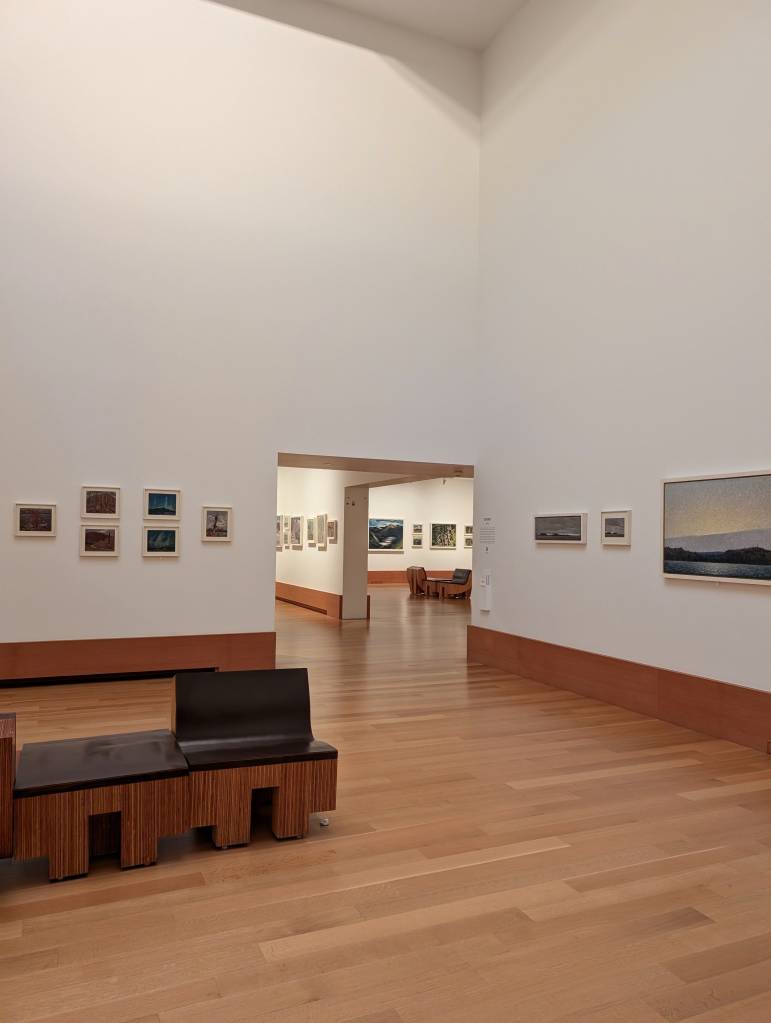
For my artist date this week, I got dressed up and took myself to the Art Gallery of Ontario (“AGO”) on Friday evening.

The prospect of conquering an entire museum in an evening was daunting- the AGO is quite large and houses many diverse collections from a variety of different artists. I decided that instead of going in with a plan, I would just browse the gallery at my own leisure and pace.1 My goal was not to think too hard about anything, try to have fun, and expose myself to different types of art and see what I was drawn to.

I have, of course, been to the AGO many times throughout my life and have some favourite pieces that I gravitate towards regularly- including Yayoi Kusama’s Infinity Mirrored Room (I first encountered and fell in love with Kusama’s installation art in 2018 when the AGO housed her Infinity Mirrors exhibition) and Henry Moore’s haunting sculpture collection (which always evokes an emotional response in me).

There were also some “newer” (to me) pieces and collections that I was drawn to. One of these included an exhibition of 20 woodcut prints by Japanese-Canadian artist Naoko Matsubara. I was unfamiliar with this medium and fascinated by what Matsubara was able to create with it. My favourite pieces in her collection were a pair of self-portraits she created almost 60 years apart. Comparing the two portraits, I could really appreciate how much her technique had changed and evolved throughout her lifetime.

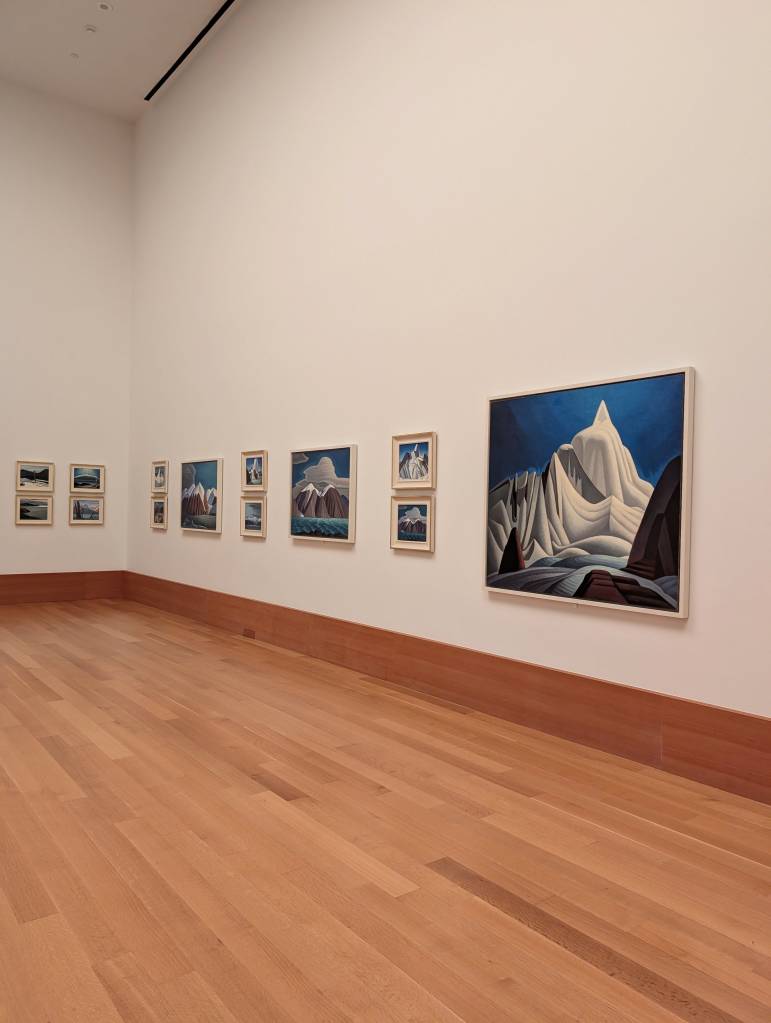
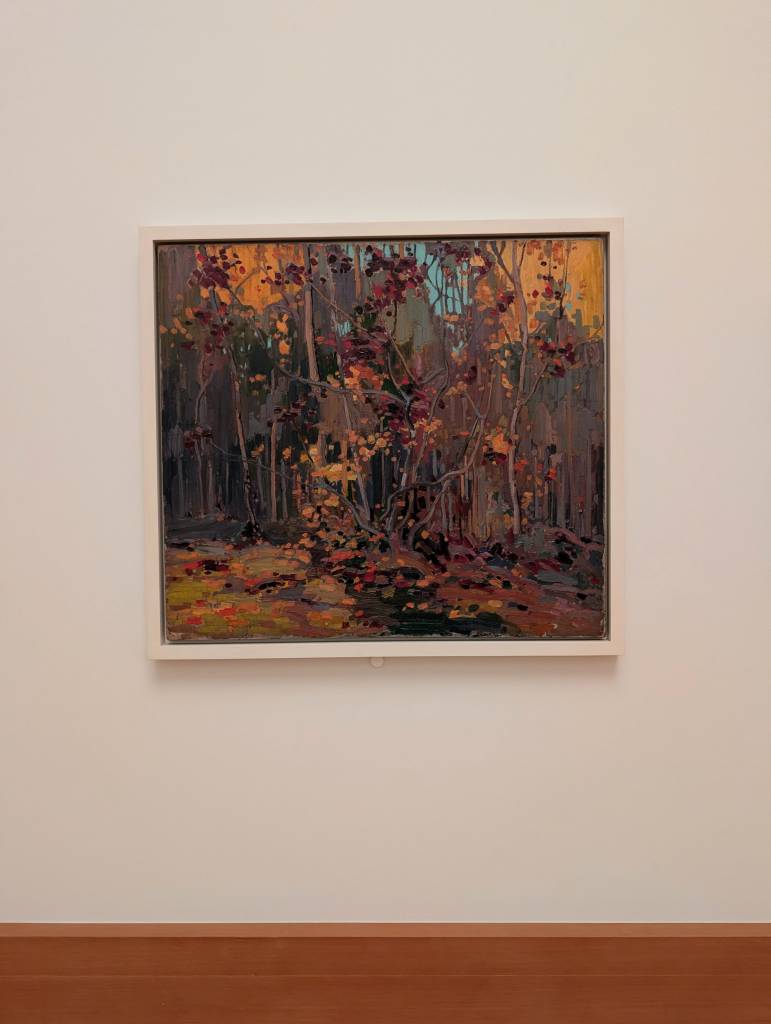
I was also drawn to pieces from The Group of Seven in a way I never have before. Growing up in Ontario, it was impossible not to be familiar with the Group of Seven- the iconic, exclusive group of Canadian artists which operated in the 1920s and 1930s and specialized in Canadian landscape paintings. I was intrigued by the Group’s lush, colourful and dynamic depictions of Canada and the importance that they placed on both capturing the visuals as well as the “mood” of a place.2

Finally, I was drawn to several photography pieces. What drew me to them was the “slice of life” element- the photos were not staged, the photographers were just documenting scenes as they existed. I looked at pictures of rural farmland in Northern Ontario, a brassy fountain in Rome, and a cluttered bookstore in Vancouver. This is the type of photography I am most drawn to- photography that attempts to capture the world in its ordinary beauty.

I spoke earlier in this post about wanting to be more personal with my art again- and I think photography would be a good place to start. I would like to start documenting my life, as it is, in pictures again. Moving forward in my journey with The Artist’s Way, I am going to set myself the task of finally fixing and re-learning how to use my old DSLR camera. For an upcoming artist date, I would love to take my camera out somewhere familiar, and nostalgic, and take pictures.

Until next week-

Laura Kate

  1. I ended up buying an annual pass- for only $10 more than general admission- so that I’ll have no excuse but to go back to the gallery again (and soon). ↩︎
  2. There is a lot that can be said, and has been said, about the Group of Seven’s goal of creating a “distinctly Canadian art style” and treating Canada as though it was an untouched land before European colonization- as if Indigenous peoples hadn’t been living and creating art in Canada for centuries already. ↩︎

The Artist’s Way: Week Two Reflections

Recovering a Sense of Identity

Happy Sunday!

I’m currently completing The Artist’s Way, Julia Cameron’s seminal 12-week creative recovery program, and documenting my experience and reflections in these posts. Each week of The Artist’s Way involves reading a chapter from the accompanying text, completing a handful of tasks, writing daily morning pages and going on an artist date.

Lessons from the Text

The second week of the program targets recovering a sense of identity. Admittedly, a lot of the text this week did not resonate with me. In it, Cameron talks about setting boundaries with people in our lives who may be hindering our creativity (including “poisonous playmates”, other unsupportive, blocked artists; and “crazymakers” who demand our time and attention).

The part of the chapter that interested me was a section titled “Skepticism” where Cameron invites us to open our minds to the possibility that “the universe” may be encouraging and cooperating with our creative desires. She illustrates this idea with the story of an artist named Mike:

“When Mike began his creative recovery, he let himself admit that he wanted to make films. Two weeks later, through a series of “coincidences,” he found himself in film school with his company paying for it. Did he relax and enjoy this? No. He told himself that film school was distracting him from his real job of finding another job. And so he gave up filmmaking to look for another job.

Two years later, remembering this incident, Mike can shake his head at himself. When the universe gave him what he wanted, he gave the gift right back. Eventually, he did let himself learn filmmaking, but he made it a lot harder on himself than the universe may have intended.”

When I was writing my morning pages this week, I reflected on my desire to be a novelist even though I struggle with my longform fiction projects. I find myself constantly bored, unhappy or overwhelmed when writing longform fiction, but have always found other types of art to come more easily- for example, drawing, writing nonfiction (such as essays and blog posts) and writing short stories. I asked myself why I have never taken short form writing more seriously, and why it was so important to me that I become a novelist instead of pursuing another path. I have always considered myself to be fairly agnostic when it comes to the question of whether there is a higher power in the universe (skeptical, but open-minded). But, this week, The Artist’s Way made me reflect on whether someone or something might be pushing me in a specific creative direction. I thought about what it might mean to try leaning into what feels easy and fun rather than pushing myself to do things that feel challenging and unrewarding.

Tasks

This week, I created a list of things I enjoyed doing and reflected on the last time I did them, drew a “life pie” illustrating my fulfillment with different aspects of my life, and came up with 5 more “imaginary lives” to build on the list started last week.

Most notably, however, was a task which asked me to list 10 changes I wanted to make for myself (“from the significant to the small”). Without thinking too much about it, I made a list- and almost everything on the list involved lifestyle maintenance work. “I would like to… vacuum my floors”. “I would like to… do an audit of my personal finances.” “I would like to… get better at bringing a lunch on days I go to the office for work.” I wondered whether I’d done the task wrong (and maybe I had), or, in the alternative, why lifestyle maintenance work was so important to me. In any event, making the list inspired me to do some lifestyle maintenance tasks, including cleaning my apartment. This ended up being good for me- I tend to be more creative in organized environments (when I’m not distracted by clutter and chaos around me).

Artist Date

For my artist date this week, I took a few hours and experimented with watercolour painting from the comfort of my apartment. I dimmed the lights, lit a candle, made myself a mug of tea, and turned on a watercolour 101 video I found on YouTube (The Complete Beginner’s Guide to Watercolour by Jenna Rainey).

The video covered a variety of topics from recommended art supplies to colour theory to actual watercolour techniques. I treated it like a real class: taking notes and practicing my technique alongside the video. Toward the end of the video, where the artist started to teach viewers how to paint a wreath, I opened up another one of her videos and followed a tutorial on how to paint a colour wheel instead.

I definitely did not create any artistic masterpieces this week, but I was happy that my artist’s date gave me the chance to experiment with a new medium that I am largely unfamiliar with. I have used watercolour in my paintings before, but without knowing anything about the medium- my technique was largely trial and error.

The theme of my artist’s date this week was “play”: I focused less on creating a perfect piece of art and more on learning and exploring. I look forward to continuing to paint with watercolour throughout this program and beyond.

Until next week-

Laura Kate