Staving Off the Winter Blues

Happy December!

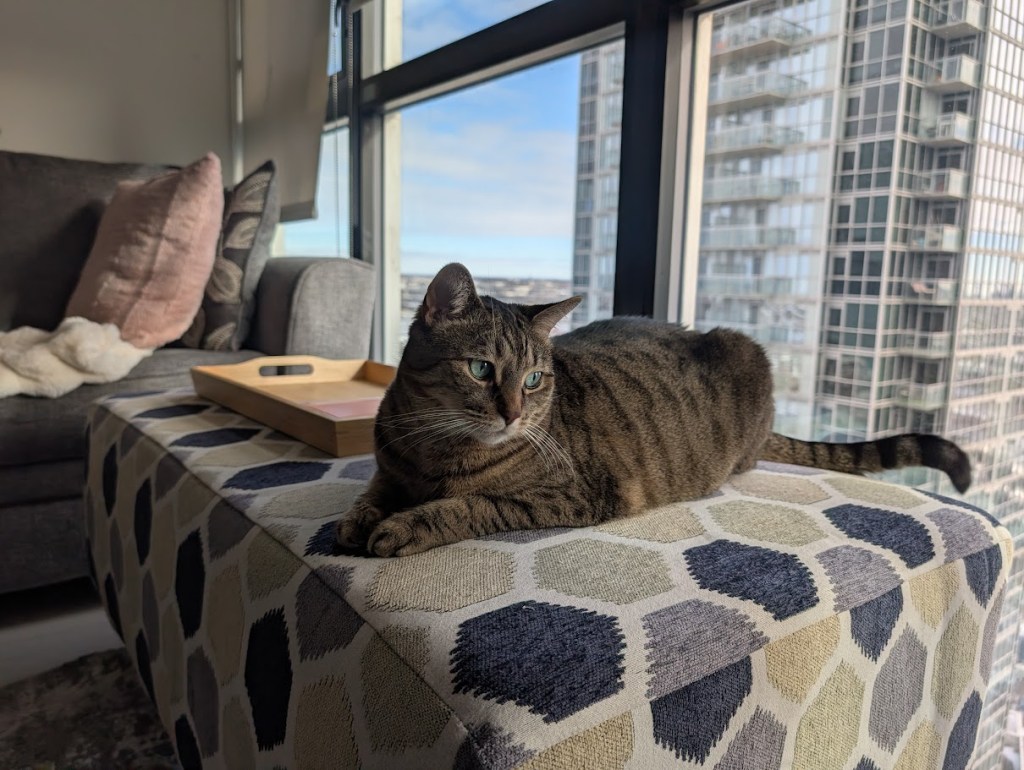
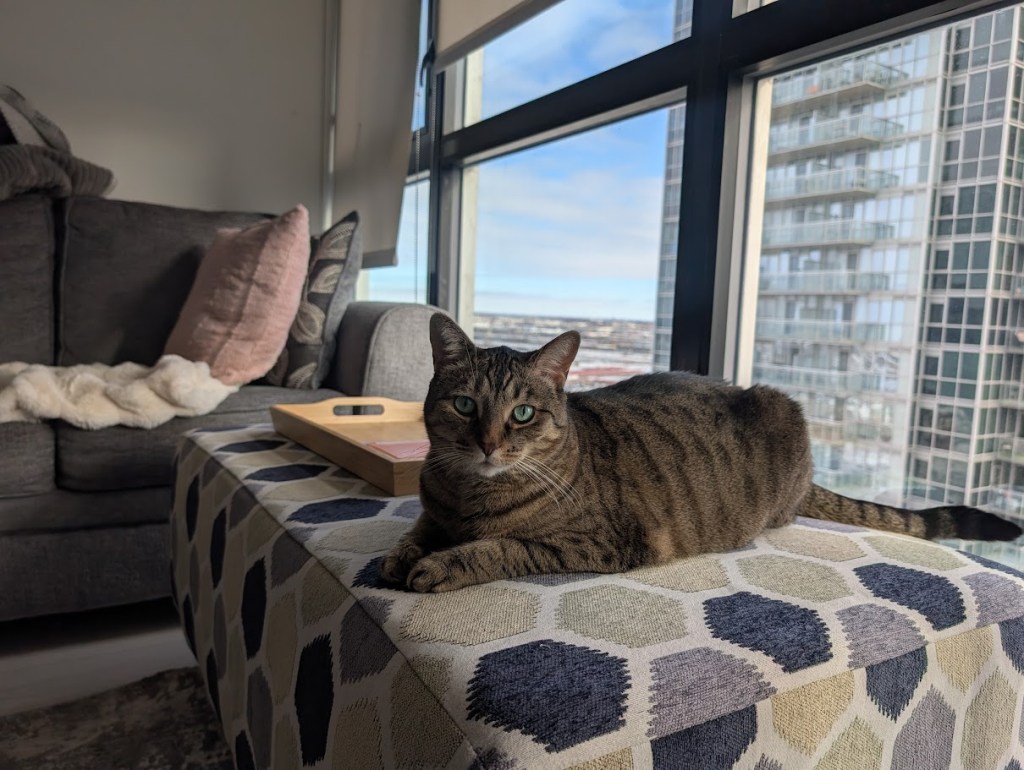
As I’m beginning to draft this post, it’s early Saturday morning. I’m sitting on the couch in my living room, nestled under a cozy blanket. I have a mug of coffee beside me and a scented candle burning. Outside of my window, I can see a dusting of snow on the nearby rooftops.1 It’s 7:30am, but it’s still dark. The sun hasn’t yet started peeking out over the horizon. 

I haven’t published anything on this blog for nearly a month. When I was working through The Artist’s Way, I had a designated topic to cover every week in my posts. Without the program, coming up with new topics to write about has been a challenge. The lack of inspiration may also just come with the season. I’ve been apprehensive about the winter for months; and I think it’s safe to say that it’s finally here. The days are short: during the week, I start work at sunrise and don’t get home until after sunset. Going outside is much more daunting with the bitter cold and biting wind. This time of year is difficult. I wouldn’t quite say that I have seasonal depression; but I, like a lot of people, really struggle to enjoy the winter. I’ve already noticed myself having less energy and feeling less motivated than usual. What’s worse: it’s only December. The worst is yet to come.

In this blog post I wanted to talk about some of the things I’ve been trying to do to stave off the winter blues. Hopefully, if you’re struggling, it might give you some inspiration or ideas about how to cope.

Layering Up

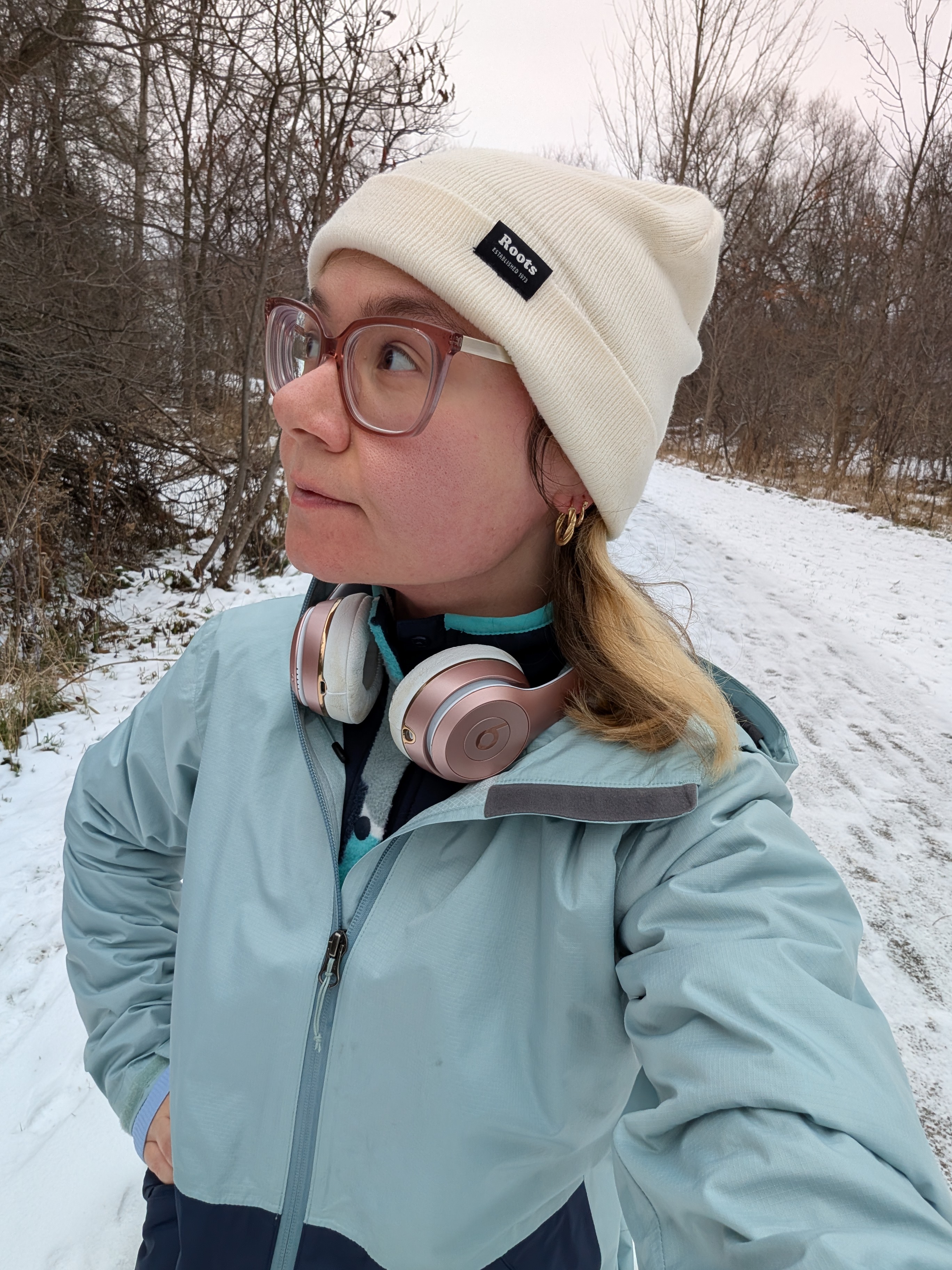
“There’s no such thing as bad weather, only unsuitable clothing.” This is something my boyfriend tells me all the time in response to my complaining about how cold it is (which is often). This winter, first and foremost, I’m committed to properly dressing for the weather. Over the last few years, I’ve developed a winter “uniform” that I wear on most days. The outfit formula is as follows. For tops, I wear a turtleneck base layer (generally something from the Uniqlo Heattech line) and a knit sweater. For bottoms, I usually wear thermal leggings (again usually from Uniqlo) under my pants. If I need to wear a skirt or dress, I wear fleece-lined tights. If I’m heading outside, I wear a warm jacket and all the accessories I need to stay warm (i.e., a toque, gloves and a scarf).

Keeping an Exercise Routine

I signed up for another half-marathon in May, so it’s important I maintain a certain level of fitness over the winter. On a weekly basis, I’m going on about three runs and incorporating two strength training sessions.2 My runs now are much shorter than the ones I was doing during half-marathon training over the summer. I’ve been committing to one short run (usually 5km), one medium run (6-8km), and one long run (9-10km) every week.

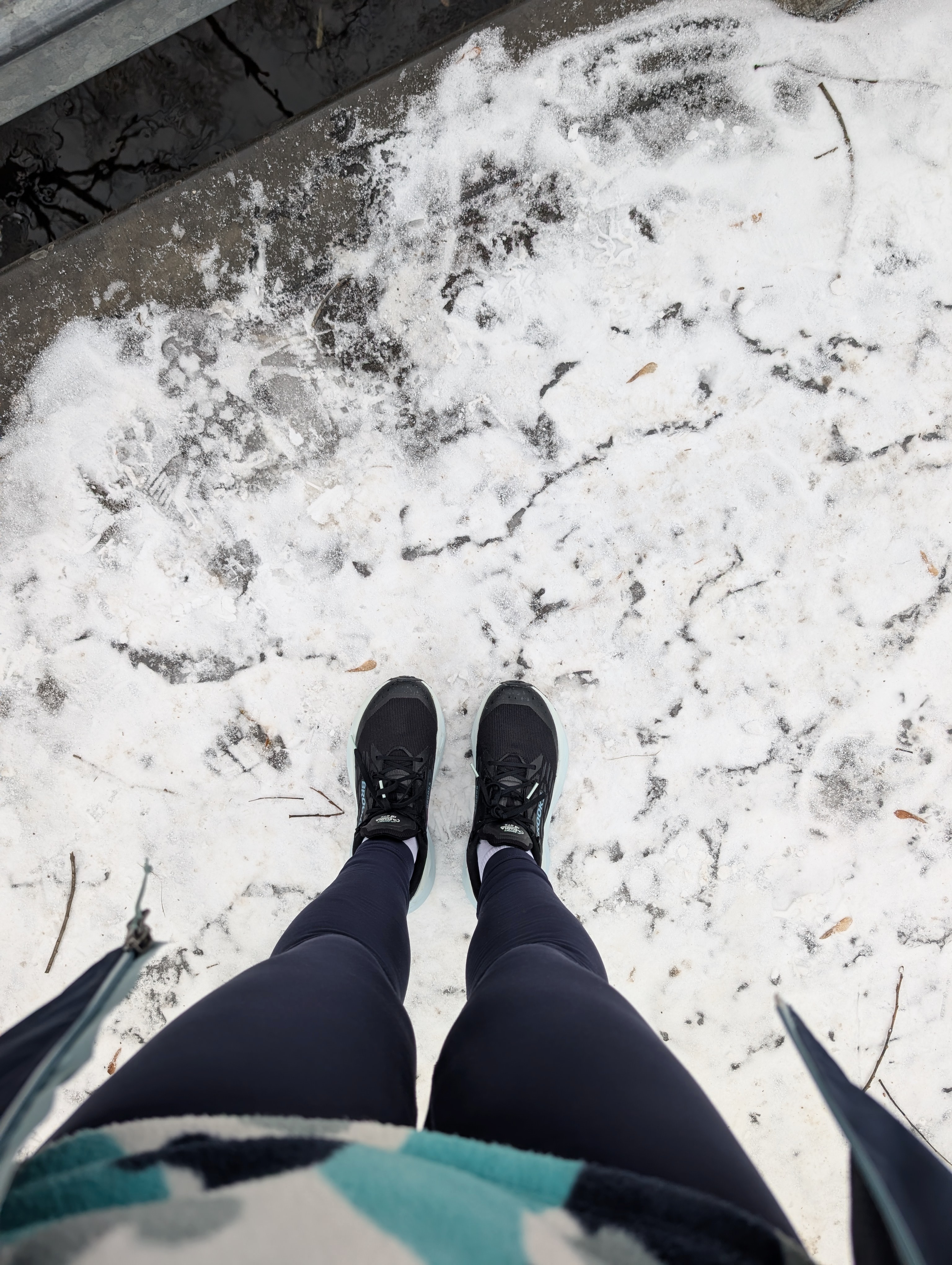
I’m also determined to continue running outside as much as possible. I’m staunchly an outdoor runner; I can’t stand the treadmill. Because of this, I’ve needed to make a number of changes to my routine to address some of the risks associated with running outside during the winter. I’ve transitioned from primarily running in the early morning to running in the afternoon (especially during my lunch breaks at work) to take advantage of the sunlight. If I do have to run in the morning or at night, I’ve purchased LED bands to wear to make sure I’m visible to other people on the roads. I also purchased special shoes for running in cold and wet conditions: Brooks Ghost 17 GTXs (waterproof road running shoes) and Brooks Cascadia 19 GTXs (trail running shoes for when roads are snowy or more slippery than usual).

I’ve also put together a winter running uniform. For tops, I wear a long-sleeved base layer (I’m a fan of the Fluid Seamless Fitted Tops from Old Navy, Momentum Seamless Tops from Athleta, and the Uniqlo Heattech line), a fleece insulating mid-layer, and a wind- and water-resistant shell jacket (I’ve been wearing the MEC x AQUANATOR Rain Jacket from MEC). For bottoms, I wear thermal leggings (my favourites right now are Uniqlo Heattech Active Leggings and Lululemon Fast and Free High-Rise Thermal Tights). For accessories, I wear a toque, gloves and a neck gaiter. I’ve been mixing and matching the pieces to suit the weather conditions- sometimes, it’s been warm enough that I haven’t needed the fleece or all of the accessories.

Continuing to run outdoors in the winter seems like an intriguing challenge. I’m interested to discover what will work and what won’t over the next three months. I’m sure there will be a lot of trial and error. For days with very bad weather, I’m not opposed to running on the treadmill; but for the majority of runs, I’m hoping I can stay outside and that the proper clothes and equipment will keep me safe.

Curbing Social Media Use

Over the last little while, I’ve started to notice my social media use gradually increasing again. Doomscrolling social media never feels like a good use of my time- I feel better after doing literally anything else. To combat this, I reviewed the social media platforms I use and deactivated and deleted a number of my accounts. I also reduced my timer on the Instagram app to ten minutes a day (and, surprisingly, haven’t tampered with it in a few weeks).

I primarily use AppBlock and UnTrap to help curb my social media use. AppBlock is a phone app and a Chrome extension that allows you to block or set time limits on apps and websites. I like AppBlock so much that I pay a monthly subscription fee for it. UnTrap is a Chrome extension that allows you to customize the appearance of YouTube on the browser and make the interface less addictive (for instance, by hiding YouTube Shorts and disabling the infinite scroll feature). I also always ensure all of my notifications from social media apps are disabled on my phone.

I’m definitely not perfect with my social media use. Even with all of my precautions in place, I still find workarounds and end up mindlessly scrolling social media sometimes. I used to get more upset with myself about this, but now, I see social media use and addiction as a battle we are all constantly fighting everyday. I don’t hold myself to a standard of perfection. I can see that I’m in a better place with my social media use now than I was two years ago, and the progress is what matters.

Making Time for Hobbies

At the end of October, I signed up for a short story writing class with the University of Toronto School of Continuing Studies. I’ve been loving it! I’m in a better place now with my writing than I’ve been in years- I feel so much more confident about my skills and abilities. I largely credit The Artist’s Way for this, as it encouraged me to start taking short story writing seriously. Throughout the writing class, I’ve drafted four short stories that I really like. I’d like to continue building up a collection of short stories and pursuing the Creative Writing certificate with the SCS. 

Learning Something New

Over the last few months, I’ve been intrigued by the concept of creating a personal curriculum. This idea has been gaining a lot of popularity online as a means of fighting social media “brain rot” and encouraging lifelong learning. To create a personal curriculum, you start by choosing a subject that you want to learn more about and then develop a self-directed “course” with designated readings (books, articles), lectures (videos, podcasts, audiobooks) and assignments. 

I’ve personally been interested in learning more about philosophy, and have started to build a personal curriculum for myself around it. My goals are to get a better grasp of the history and topics within the field and read some primary texts. This isn’t necessarily just a winter project, but something that might turn into a 2026 goal more broadly. If I stick with it, I’m sure it’s something I’ll make more blog posts about in the future. 

In any event, these are some of the things I’ve been up to that have been helping me deal with the winter blues. I hope that if you’ve been struggling, this post (or others like it) might be able to give you some ideas on how to stave them off for yourself. And, if not, just remember that this too shall pass. Even though the next few months are going to be tough, spring will come again soon enough. I started off this post by talking about how it was 7:30am and the sun hadn’t yet started to rise. It helps to keep in mind that December 21st is just around the corner, and the days will start getting longer again. 

With love, 

Laura Kate

  1. This might sound romantic, but I actually live in a condo in an industrial area, so it’s much less picturesque than you’re probably envisioning. ↩︎
  2. Strength training is new to me and something that I’m doing to make me a stronger runner. I’m keeping it very easy and have just been following videos from fitness coaches online. My favourite workouts have been from the channel Nourish Move Love on YouTube. ↩︎

What Running Taught Me About Being a Beginner

Alternative title: “A Love Letter to Running”

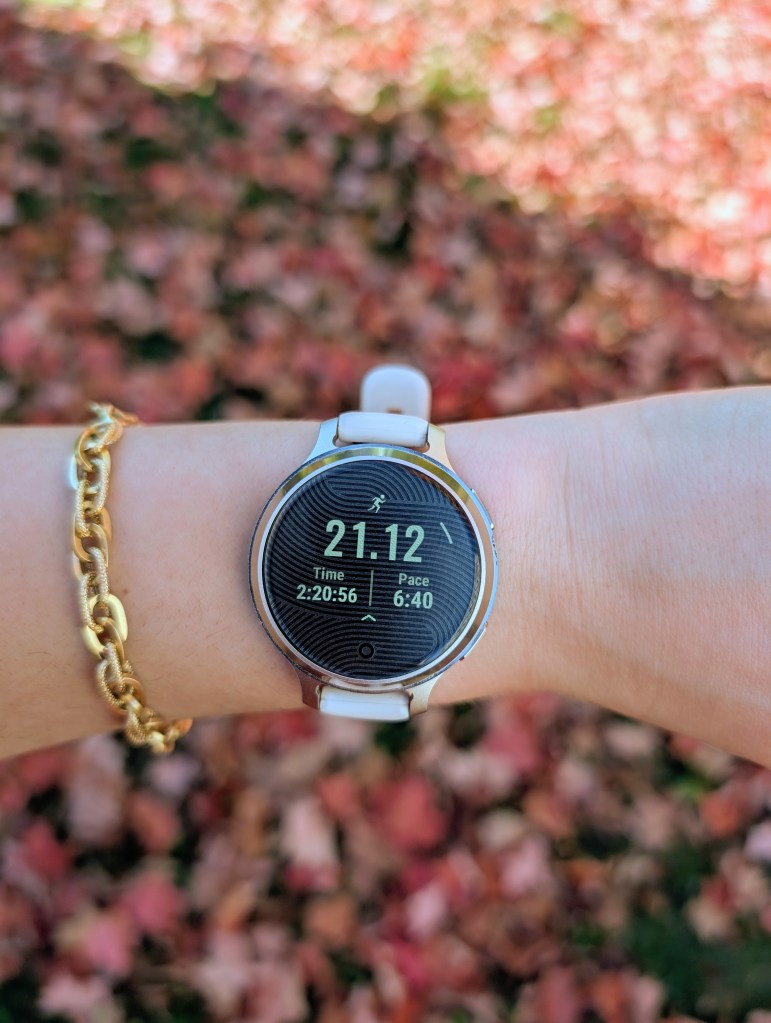
On October 19, 2025, after more than 7 months of training, I ran the Toronto Waterfront Half Marathon; my first half-marathon race.1 It was incredible- one of the most difficult things I’ve ever accomplished, and also one of the most rewarding. 

I’ve been a runner now for a little over a year. I started running in the summer of 2024.2 My first 5-kilometre race was the Holly Jolly Fun Run that November. In May of this year, I ran the Sporting Life 10k. From there, I decided to keep my momentum going and train for a half marathon. 

Training didn’t come easily. I started with little to no base level of running ability. Although I regularly walked and hiked long distances, the last time I’d tried to run was in high school gym class. In deciding to become a runner, I knew I would be starting from “zero”: being able to run continuously for maybe one minute maximum (and no, I don’t even mean in one minute intervals) and after a lifetime of telling myself that I was bad at sports and could never be an athlete. This being said, starting from zero ended up being a good thing for me- it prevented me from setting my expectations too high and letting perfectionism get in the way of the process. 

While running has brought so many great things into my life, the biggest benefit I’ve gained has been learning how to be a beginner. In this blog post, I wanted to talk about my experience becoming a runner, and share some of the lessons it has taught me- lessons which are applicable to so many other areas of life.

Lesson One: Set Small, Incremental Goals.

When I started running in June 2024, my initial “end goal” was to run a half-marathon by that October. At first, I thought a half-marathon was something I could reasonably train up to in 4 months. I found some “couch to half marathon” training plans online and tried to follow them; but quickly found that running was a lot more difficult than I expected. I wasn’t able to hit the targets in the plans, became quickly discouraged, and eventually gave up training.  

Things changed in the fall when I made an offhand comment to my now-boyfriend that I wanted to be a runner. A runner and cyclist himself, instead of suggesting that I sign up for a big race, he encouraged me to start with a 5k. Compared to a half-marathon, I found training with a 5k goal in mind much less daunting. Instead of worrying about the prospect of running for more than 2 hours straight, I only had to worry about running for 35 minutes. I signed up for the Holly Jolly Fun Run, and, after a few weeks of training, I was able to finish the race with a 33-minute time.

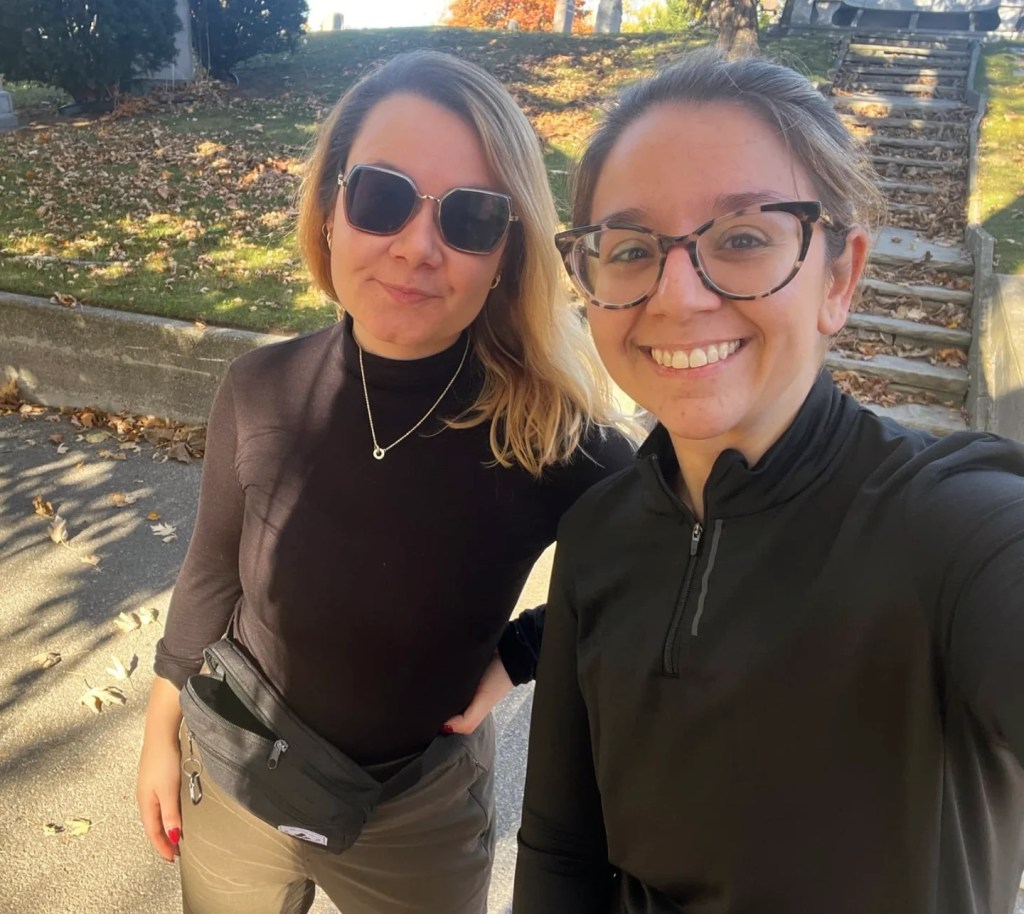
My friend Stephanie and I in November 2024
training for the Holly Jolly Fun Run 5k

Something I would recommend to all new runners is to set small, incremental goals instead of big ones. Things “clicked” for me when my targets became more achievable. My first few running goals were so small that they weren’t related to distance at all, they focused on time: run 3 minutes without stopping. 5 minutes. 10. 15. When I was able to run in 15-minute intervals, my focus shifted to distances: run a 5k. A 10k. A half-marathon.

When the path to a goal seems more achievable, you’re more likely to work towards it. You can build towards your big goals by setting small ones. This approach keeps you focused on the present instead of worrying about a distant, more-intimidating future.

Lesson Two: Embrace Novelty. 

As a beginner, it’s important to periodically check in with yourself and evaluate what methods are working for you and which are not. It’s also important to experiment with new tools and strategies. 

My running strategy has evolved dramatically from when I started out. Some modifications were borne out of necessity from having to solve problems that arose over the course of training. For instance, something that came up early on was experiencing calf pain for days following runs. I was able to resolve this issue by implementing a pre-run stretching routine, buying better shoes and changing my footstrike. I also started experimenting with a shoe rotation when I started experiencing blistering from wearing the same pair of shoes on every run. 

Other modifications to my running strategy came from experimentation for fun. I tried running with both running belts and hydration vests, and found out that I vastly preferred running with vests (despite how dorky I thought they looked). I also experimented with different ways of carrying water (smaller flasks vs. water bladders) and different ways of fueling (I first tried dates, then moved onto running gels and chews).

Trying new things isn’t just a tip for beginners- I think it’s something we should all challenge ourselves to do. Failing to embrace novelty can hinder your personal growth and development. 

Lesson Three: Understand that Progress is Not Linear.

I’ve heard a saying that for every one good run, there will be one mediocre run and one bad run. Not every run will be great. Some runs will be awful. You will not notice improvement after every run. Some days you won’t want to run at all. But, even in the face of roadblocks,  you need to persist.

I’ve experienced my fair share of “bad” runs. I had a number of runs where I had to stop after 2 or 3km because of excruciating side stitches, runs I had to take breaks in the middle of, and a meant-to-be-12km run that I ended early because I ran out of water.

My biggest failure was on what should have been a 20km peak long run in September. I’d been building up to 20km for months, and had just done a 19km run the week before. Despite this, when out for my 20km run, I hit a total mental roadblock very early on and had to stop. I tried taking a half hour break, walking, trying to re-motivate myself- but nothing worked. I didn’t complete the run. Nonetheless, I didn’t let one shitty run get to me. The next week, I tried again, and ended up running my first 21.1km distance.

Progress is not linear; there will be highs and lows in everything we do. The most we can do is learn to trust and embrace the journey.

Lesson Four: Surround yourself with people who make you feel supported.

Something I struggle with is comparing myself to other runners in terms of pace. I’m definitely not the fastest runner out there. I’m still working on accepting that everyone is different, everyone’s bodies are different, everyone has different abilities, and the only person I should be comparing myself to is myself.

Something that has helped me immensely in this particular struggle is following influencers from the “slow running” community online. There’s not a specific pace that defines a slow runner, but in general, slow runners prioritize enjoying running and getting longer distances under their belts instead of worrying about how fast they’re going. This running community reminds me that I can still be a runner, even if I’m not going to win any races anytime soon. I’m also very lucky to have other wonderful runners in my offline life (like my partner who slows his pace to match mine when we run together, and my friend Stephanie, a natural cheerleader) who provide support and encouragement every step of the way.

Future Running Goals

In just one year, running has brought so many good things into my life, and I’m so excited to see what my future in the sport will look like. Now that I’ve finished a half-marathon and fallen in love with long-distance running, you’d think that I’d want to immediately start training for a full marathon- but I don’t. Not yet, anyway. My goal over the coming late fall and winter seasons is to maintain my running fitness. I would like to continue regularly running 10km. I’m considering training for another half-marathon in the spring, but I haven’t signed up for any races yet.  Even though I’m excited to continue making progress, I’m also excited to move into a period of maintenance, where I can give myself permission to slow down, just for a while. 

Perhaps ironically- there’s no rush.

With love,

Laura Kate

  1. For anyone counting, I finished the race in 2 hours and 11 minutes. ↩︎
  2. I started running for a number of reasons, some more ridiculous than others. These included: (1) being bitter about one of my exes, who is a runner; (2) wanting to strengthen my fitness routine with an exercise more intensive than walking; and, (3) wanting to play into the joke about people in their late twenties either getting married or training for a marathon (I wasn’t getting married anytime soon…). ↩︎